
Hamburg Township Historical Directory Sources
Hamburg Township is a civil township, not an incorporated city. That fact shapes every search. No commercial run covering Hamburg alone is known to exist. A historical directory search is therefore a trail through collections, not one tidy township-wide roster. The best leads are a Livingston County directory and a Howell city directory. Statewide directory shelves help too. Local repositories hold telephone books, maps, and related records. Keep each source's printed geography intact. A Howell entry can be genuinely useful. Yet it never proves the book covered all of Hamburg Township.
| Collection | Years | Where Held | Access |
|---|---|---|---|
| Livingston County Directory, J.W. Keating and J.H. Pawling | 1873-74 | Livingston County genealogy research listing | County lead, confirm a Hamburg Township entry in the copy |
| Howell City Directory, Howell Commercial Club | July 1915 | Library of Michigan photocopy lead | Name, street, and occupation indexes |
| Michigan city and county directory holdings | Various, verify each volume | Library of Michigan shelves and microfilm | Print, microfilm, Ancestry Library Edition, HeritageQuest |
| Directories and telephone books | Various, not fully cataloged online | Howell Carnegie District Library Archives | Appointment and repository consultation |
The 1873-74 volume is a Livingston County lead, not proof of coverage for every township. Howell's July 1915 directory carries name, street, and occupation indexes. Still, it remains a Howell book, not a Hamburg Township roll. Handle missing years with care. A rural Hamburg Township household may have sat outside a publisher's delivery area. It may have appeared under initials or a business name. Or it may have been skipped altogether.
Note: Record the volume title, printed locality, index mode, and page. Then compare any entry with another source.
Hamburg Township Directory Boundaries
Historic labels matter in Hamburg Township. The township was organized in 1835. Genoa split off in 1837. So older family references can cross a later boundary or borrow a nearby place name. Hamburg, Pettysville, and Newburg are local history names. A printed directory, though, may say Livingston County. It may also say Howell, a rural route, or some other postal label. Every volume is a dated description from its publisher. It is not a modern geographic ruling for Hamburg Township.
The strongest check pairs a listing with a source that answers a different question. A directory can place a named household at a printed address in one year. A census tests household composition. A deed identifies recorded parties, and an atlas shows the road or landowner context. Never silently substitute one for another. For current address-keyed material, use the separate Hamburg Township by-street directory route.
Hamburg Township Directory Year Leads
The verified dates form a small but useful chronology. Livingston County material points to the 1873-74 Keating and Pawling directory. The Library of Michigan guide preserves the Howell Commercial Club's July 1915 directory lead. The 1895 Standard Atlas of Livingston County belongs to a different source class, yet its township plats, landowners, and reference matter can bridge a directory name to a road or section. Census pathways for Hamburg also cover 1850 through 1880. There is no 1890 census shortcut to fill the gap.
- 1835: Hamburg Township is organized, creating an early jurisdiction marker for local research.
- 1837: Genoa separates, so early records can use a boundary different from the one used today.
- 1873-74: The Livingston County Directory appears as the earliest verified directory lead.
- 1895: The Livingston County atlas supplies a landowner and road-context snapshot, not a household directory.
- July 1915: The Howell Commercial Club directory provides indexed city listings to inspect for a Howell connection.
Later publisher names are research paths, not confirmed Hamburg runs. The statewide guide lists Polk, Bresser, Robinson's, and Norton. Johnson Publishing and W.C. Bailey appear there too. Gazetteers and Luedder round out the list. Ask the repository for the exact title and locality first. Only then treat any publisher name as coverage of Hamburg Township.
Hamburg Township Historical Directory Context
Hamburg Township Library's local-history collection is the closest place to put a directory name in context. At 10411 Merrill Road, the library holds family histories, genealogies, and memoirs. It also keeps community history, Settlement Days materials, and environmental records. Local culture sources round out the shelves. Its phone is 810-231-1771. None of it is a commercial directory run. Still, it can separate an old Hamburg Township family, community, or place reference from a modern guess.
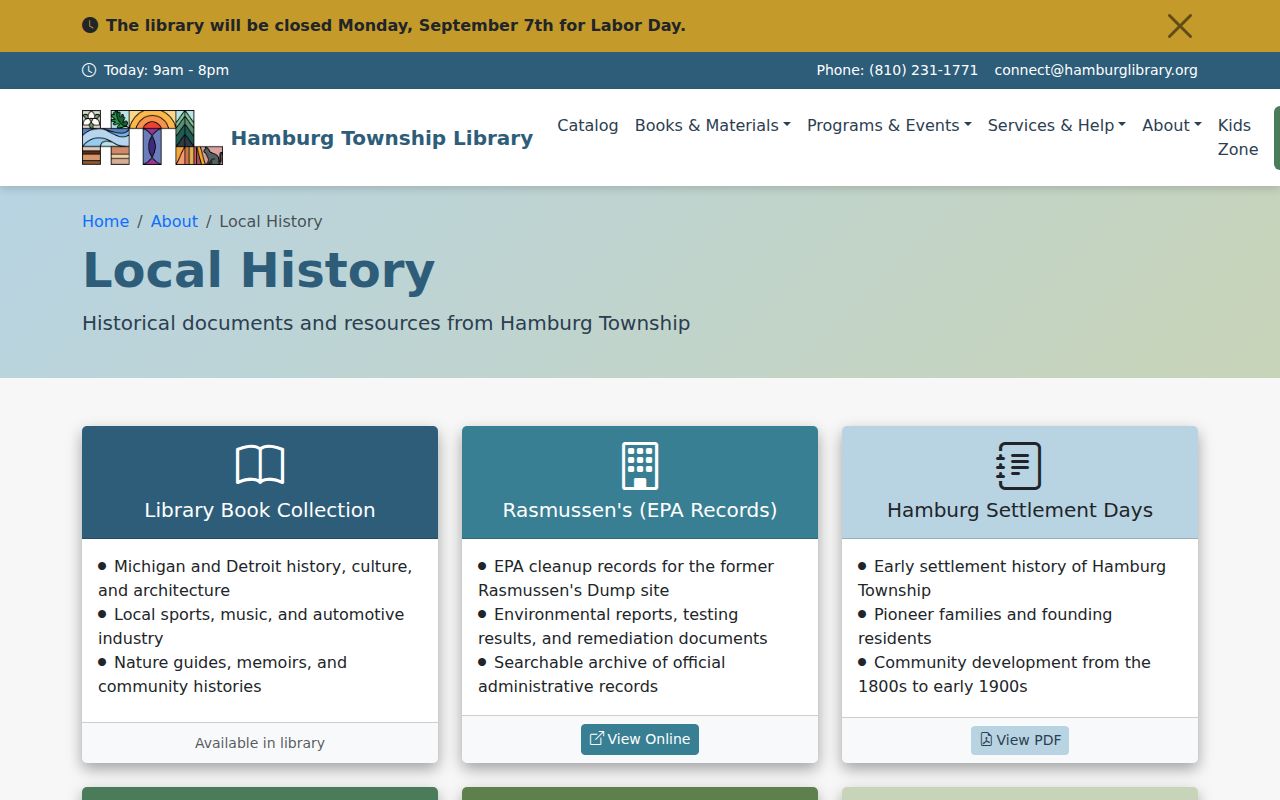
Local-history context earns its keep. It matters when a listing shows a rural route, an abbreviated community name, or a local institution instead of a modern street address.
The library's genealogy resources add HeritageQuest, Fold3, FamilySearch, Michiganology, and other historical search paths. Some databases depend on the library's current access method or its public computers. A winter 2025 notice also described recurring genealogy walk-in help with Livingston County Genealogical Society volunteers. Confirm the program before a trip.
A surname from a historical directory can be checked in a genealogy index without turning an old Hamburg Township entry into any claim about who lives there now.
Howell Archive Directory Searches
Howell Carnegie District Library Archives offers a wider Livingston County shelf. It is appointment-only at 314 W Grand River in Howell. Holdings include directories, telephone books, and original property abstracts. Cemetery records, township records, plat maps, yearbooks, newspapers, and microfilm are also held. Contact the archive before expecting a particular Hamburg Township item. Not all of its roughly 1,000 subject boxes are described online.
Howell's digital archive supports Keyword, Boolean, and Exact match searches. Record-type controls cover Item, File, Collection, Exhibit, Exhibit Page, and Simple Page. The service reported 10,757 items across 18 collections and 9 exhibits. Search a surname, street variant, township, or lake name. Then read the record context. Do not trust a collection title alone.
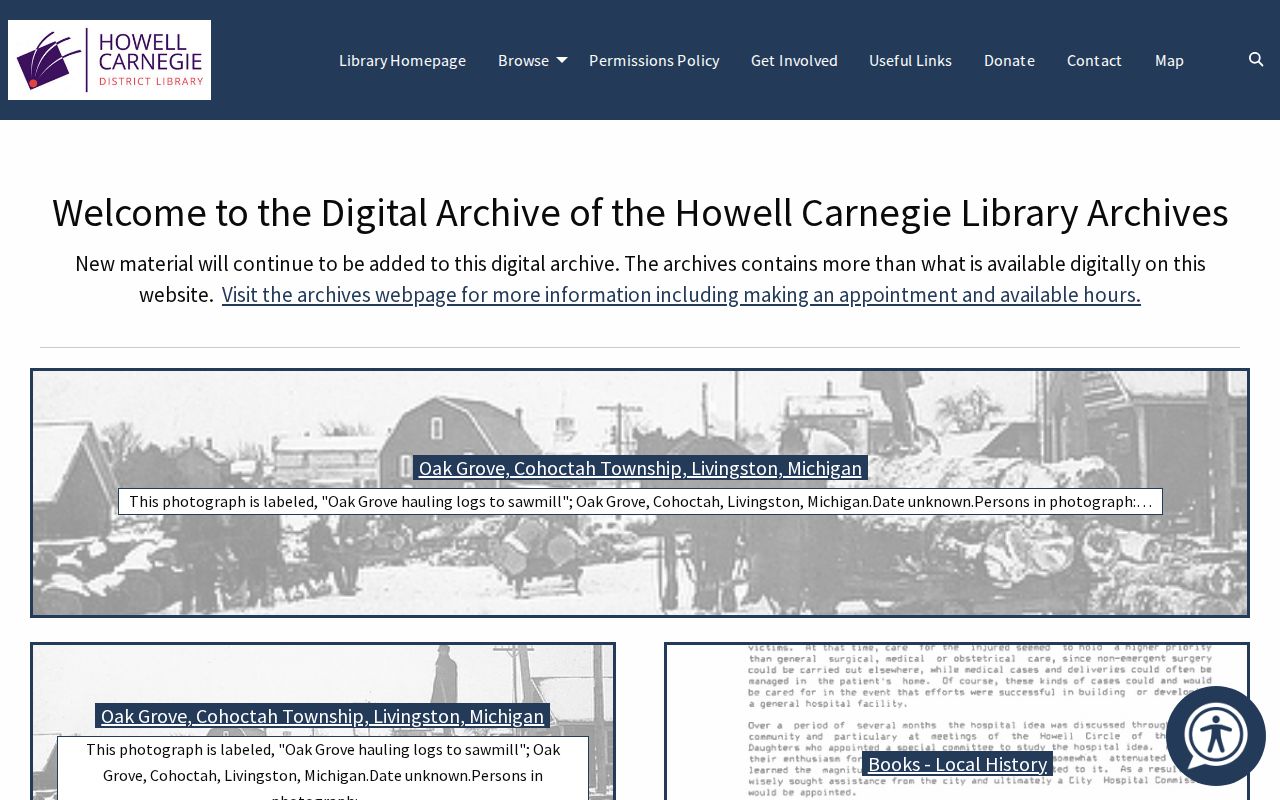
Digitized volumes are only the first layer. The appointment repository and the Local History Room hold Hamburg Township material that never made it online. A full residents directory search often ends in person. Plan for both.
Obituaries, newspapers, and property abstracts can rescue a stalled household trail. A name that drops out of a street directory. It may still surface in a published obituary. That notice gives a dated clue, not an address history. Keep its date and source. Then weigh it against a directory year, a census page, a deed, or a cemetery record.
Michigan Directory Index Modes
The Library of Michigan guide to historical directories shows why a single city directory volume can answer several questions. One traditional listing may carry a head of household and other relatives. It can also list a street address, an occupation, and owner or renter status. Some entries add a business listing. A few even include a telephone number. Every volume is different. Hamburg Township entries will show whichever fields that publisher chose to print, so treat the field list as a range of possibilities rather than a promise.
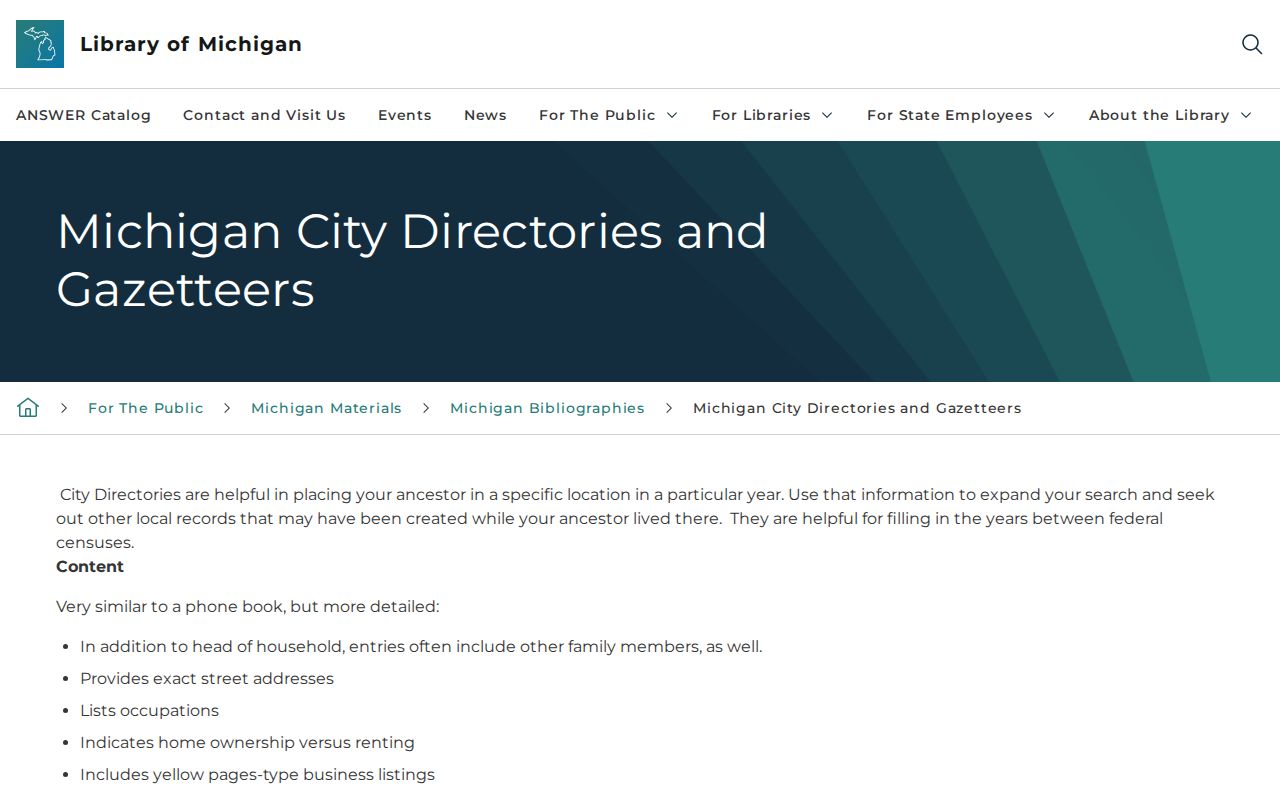
Historical Michigan directories come in more than one arrangement. Surname mode lists people alphabetically by last name. Street mode, by contrast, walks a road house by house. Household heads appear in house-number order. Phone and business modes add another wrinkle: the cross-references there often use different wording entirely. Knowing which mode a volume uses saves hours of squinting at the wrong index.
The Library of Michigan holds historical county and municipal directory volumes on its second-floor south shelves. Its guide also covers microfilm and fiche. Print holdings sit alongside Ancestry Library Edition and HeritageQuest access. Before planning a Hamburg Township research trip, confirm the current shelf location with the library. Also confirm the database license and physical condition.
Reading a Hamburg Township Directory Entry
Transcribe a historical directory entry exactly as printed before trying to interpret it. Note the spelling, household-name line, address, and page. Record the year, publisher, and locality label. Also note whether the hit came from a surname, street, phone, or business index. Only after that should you add a normalized spelling. Keep it separate, purely as a search aid. The discipline pays off later. When an initial, spouse name, farm name, or surname variant surfaces in another record, you can return to the Hamburg Township entry. Then you can compare it cleanly.
| Name line | May identify a household head, a relationship clue, initials, or a cross-reference. |
|---|---|
| Address | Printed house number and street, rural route, or locality label as the volume gives it. |
| Occupation or business | A dated work or business clue, when the particular entry includes it. |
| Owner/renter mark | An occupancy clue only when the volume supplies and defines a mark. |
| Telephone or index reference | A listed historical contact or pointer that should be retained with its index mode. |
- Criss-cross directory
- A reverse arrangement that places entries by street and house number rather than by surname. No verified Hamburg-specific run was located.
- Householder index
- A name arrangement centered on the household listing, which may omit other people living at the same address.
- Abbreviation key
- The volume's own explanation of shortened terms and symbols. Check it in the scan or reading room before expanding any mark.
Note: Never borrow an abbreviation's meaning from a different publisher or year, since directory keys were never standardized across volumes.
Tracing Hamburg Township Directory Households
Treat a historical directory as one dated stop along a household trail. Sparse volumes will not yield a continuous list, and forcing one only builds false certainty. Instead, document each observation on its own. Then test it against a source carrying a different relationship label. For family-history work in Hamburg Township, the county directory, Howell index, atlas, census, obituary, and repository materials line up best. Their dates stay visible beside each name.
- Start with the earliest confirmed spelling, printed locality, and year for the household name.
- Search the surname mode, then test street, phone, business, and neighboring-entry routes when the book provides them.
- Copy the exact address or route, page, publisher, and any printed owner/renter or occupation notation.
- Pair the directory year with the closest available census year, keeping in mind that there is no 1890 census replacement.
- Use an atlas, deed, obituary, or cemetery source to test a move, death, land reference, or family connection.
- Write an uncertainty note when a year is unlisted, the locality changes, or a publisher's coverage is unknown.
A household can drop out of a directory for many reasons. A move, a death, a name spelled a different way. A route the publisher never walked, or a volume that simply never survived. No single explanation wins on its own.
When an old Hamburg Township listing needs a modern check, the Hamburg Township resident lookup workflow sorts each match into its true relationship. A parcel owner is not the same as a court party. A voter record is not the same as a neighbor. Keeping those roles apart keeps the residents directory search honest.
Hamburg Township Directory Gaps
Some directory gaps stand out. No Hamburg-only Polk run is confirmed. No separate Hamburg criss-cross volume, no surviving entry image, and no volume-specific abbreviation key. The township also publishes no complete historical street-renumbering history. Treat each one as a lead for a repository inquiry, never a slot to fill with a guessed date or a copied symbol.
Ask a librarian or archivist pointed questions instead. Which publisher and date span? What locality heading and index style does the volume use? Is it print, microfilm, or database-only? For older land context, name the section, lot, legal description, road variant, or nearby landowner first. A modern street address comes last. Availability, fees, coverage, and access rules rest with the linked custodian and can change.